
The voice is the test. If Death draws you in, the people of Himmel Street may keep you there.
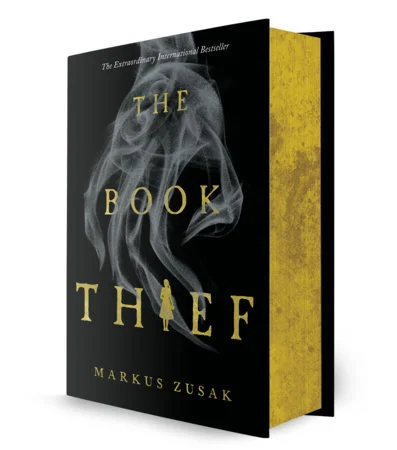
The Book Thief is a novel about a young girl who learns the force of words in a place where words can do great harm. It is also a book told by Death. That choice shapes far more than the opening pages.
My recommendation is a qualified yes. Choose it if you like strong narrative voices, close friendships and stories that face grief directly. Sample it first if you prefer plain, unseen narration. The very feature that makes The Book Thief stand out is the one most likely to put you off.
This review keeps the ending out of view. It covers the premise, style and reading decision rather than walking through every turn of the plot.
| Author | Markus Zusak |
|---|---|
| Kind of book | Historical fiction, published in the U.S. as a young adult novel |
| Setting | Fictional Molching, Germany, around World War II |
| Narrator | Death |
| Main strength | The link between language, care and loss |
| Main reservation | A very visible voice with frequent hints of what lies ahead |
| Edition shown | 2016 anniversary hardback, 592 pages, ISBN 9781101934180 |
What is The Book Thief about?
Liesel Meminger arrives at the home of her new foster parents after an early family loss. Hans and Rosa Hubermann live on Himmel Street in Molching, near Munich. Liesel has a stolen book, but she cannot yet read it. Hans helps her learn.
Books become a thread through her new life. So do her friend Rudy Steiner and Max Vandenburg, a Jewish man in danger. Liesel's foster family hides him. The household offers care, but it cannot shut out Nazi Germany or the growing reach of war.
That premise gives The Book Thief two scales. One is a child's daily world: lessons, neighbors, small loyalties and fear. The other is the mass violence around her. Death can move between them in a way a young girl cannot.
Do not expect a military novel with campaigns and tactics at its center. The focus is on how people live under pressure, and how words can bind them together or turn them against others.
Why is The Book Thief narrated by Death?
The stolen books are more than prizes
Liesel starts stealing books before she can read them. Her first theft comes at her younger brother's funeral. She takes The Grave Digger's Handbook near her brother's grave. That order matters: the object holds a link to a loss before its words make sense to her. Markus Zusak gives reading a physical start, with a book that can be hidden, held and kept.
Later, books come from very different places, including a burning and the mayor's library. The acts do not all mean the same thing. A rescued book and a book taken from a private shelf carry different questions about need, power and ownership.
The mayor's wife adds another kind of bond to Liesel's life. The mayor's wife's library offers a space beyond the foster home. That tie has its own grief and friction. Watch how access to books changes the way Liesel sees a person she might otherwise know only by their place in the town.
There is a useful tension here. Stealing books gives a young girl a small act of control, but the story does not make control the same as safety. She still needs people. Her foster parents, her friend and the mayor's wife each shape what she can do with the words she finds.
Death has a strange advantage as a narrator. No life is outside his reach. Yet that wide view does not make him calm about human cruelty. In Markus Zusak's account of choosing Death, the key idea was a narrator disturbed by what people do to one another.
That changes the expected role. Death is not simply the threat waiting at the end. He is also a witness trying to make sense of human life. The distance can make a small act of kindness seem more stark against the scale of the war.
It also changes suspense. The Book Thief often lets you know that loss is coming. The question is less whether everyone will be safe than how a life gains meaning before it ends. Readers who need each future event kept secret may find this hard.
I see the voice as a reason to try the book, not a trick to endure until the real story starts. If you like the premise but dislike every interruption, the whole novel may become a struggle. Give the opening enough space to show its rhythm, then trust your response.
Death's perspective: an unlikely narrator
Short sections, striking images and direct comments break up the narrative. Death does not pretend to be a clear pane of glass. He keeps drawing attention to the act of telling. His wide view is an interesting perspective on a young German girl whose own world is much smaller.
For some readers, that turns a familiar wartime setting into something fresh. For others, it feels as though the prose is asking for an emotion before they have felt it. Both reactions make sense. A strong style is a matter of fit, not a test of taste.
The title may suggest a quiet story about a child and her books. The form is far more assertive. That gap between premise and voice is worth knowing before you buy.
The people at the heart of The Book Thief
Liesel Meminger, the young girl who learns to read
Liesel's need for books is bound up with loss and the wish to hold on to something. Learning to read gives Liesel Meminger a new way to name her world. She can begin to tell her own story rather than hear it only from others. It also makes her less dependent on what other people choose to tell her.
That is the part of the premise I find most persuasive. Reading is a skill built through time with another person. It can be a bond before it becomes an idea about freedom. Liesel and Hans make that bond concrete.
She is a child in danger, but she is not only a symbol of innocence. Her choices and ties give the story its small scale. A review that treats her only as a lesson about books misses the person the novel asks you to follow.
Hans and Rosa Hubermann, her foster parents
Hans gives Liesel patience and a path into words. Rosa's manner is harsher. Their different ways of showing care give the household more texture than a pair of flawless rescuers would.
Her foster parents Hans and Rosa matter because safety is shown as work. It needs food, a place to sleep, time and a willingness to take risks. A kind thought alone will not keep a household going. For a foster girl who has lost so much, this daily care can help build trust.
I would pay attention to the gap between what Hans and Rosa Hubermann say and what they do. Love is not always given a soft voice. That does not make harshness a virtue, but it does make the family worth talking about.
Max's story
Max Vandenburg is a Jewish man in hiding. His presence changes the risks within the home. He brings his own life and losses into the story, even as he has to stay out of sight. His friendship with Liesel gives words a role beyond lessons. A story can be a gift when a person has very little else to give.
Keep his danger in its proper context. It is not simply another form of the young girl's hardship. Nazi persecution targets him as a Jew. Careful reading should preserve that difference, even when the characters share grief and fear.
Rudy Steiner
Rudy gives Liesel a bond outside the home of her foster parents. As a young boy on the same street, he shares a part of life that adults cannot. Friendship brings play, friction and loyalty into a story that could otherwise be all dread. Those ordinary things matter because war does not stop children from being children.
They also make the stakes personal. A reader need not know a nation's full history to care about a friend. The harder task comes next: keeping that care connected to the wider history, rather than letting one fictional street stand for all of it.
Words, power and Nazi Germany
The sound of home
Hans is an accordion-playing foster father as well as a patient teacher. That detail gives his care a sound. Music and reading are both things he can share with Liesel, though neither removes the fear outside the house.
Liesel's foster father does not need a grand speech to become important to her. His presence, his patience and the time he gives are part of what makes home feel possible. In The Book Thief, love is often measured in time spent with someone who cannot yet feel safe.
That also gives Rosa's place more weight. If Hans brings one kind of warmth, Rosa helps hold the household together in another way. It is easy to favor the gentler adult. A closer reading asks what each of Liesel's foster parents does when care becomes hard.
The contrast makes The Book Thief a useful choice for readers who like family stories. The foster parents have distinct voices and flaws. Their home has rules, work and conflict. It feels more useful to discuss those daily choices than to sort them into a simple list of good and bad traits.
The Book Thief sets private reading against the public abuse of language. Words can help a child find a voice. They can also spread lies, mark people as enemies and give cruelty a false sense of purpose.
Markus Zusak resists a simple claim that books are always good. The power lies in what is said, who can say it and what people are taught to believe. Reading with care matters more than treating every printed page as sacred.
The United States Holocaust Memorial Museum's account of the 1933 book burnings gives the real background to the Nazi book burnings and attacks on literature. Those events predate much of Liesel's story. Keep the historical dates distinct from the novel's scenes.
For a book club, I would focus on specific acts. Who gets to teach? Who gets to speak in public? Who has to hide what they think? Those questions give the theme more weight than a broad statement that words can change the world.
The past inside the foster home
Hans's bond with Max reaches back to the First World War. Max's father, Erik, died in that war, while Hans survived. The debt Hans feels helps explain why the danger in his house is more than a sudden test of kindness. An older loss has become part of his own life.
The Nazi Party puts a different kind of pressure on the family. Hans's son judges his father's refusal to join the Nazi Party as weakness. That clash brings public power into a private home. Nazi Germany is not a distant backdrop when a son demands that his father prove which side he is on.
These ties deepen Liesel's world. Her foster father has a history before she arrives. The adults around her carry fears and duties that she cannot fully know. Markus Zusak lets a young girl's story brush against those older lives without making her understand every part of them.
What The Book Thief does well
It gives care a practical form
A lesson, a shared story or a place in a home can matter more than a speech. The novel's premise makes room for these small acts. Hans and Rosa Hubermann cannot control the state around them, but their choices still have costs and consequences.
That scale is a strength for readers who feel lost in large war stories. You can see what one person can do, without needing the story to claim that one person can fix everything.
It makes form part of the meaning
A tale told by Death cannot approach time in quite the same way as a diary. Hints of future loss change how you read a calm scene. The knowledge can make you notice a moment instead of racing past it toward the next surprise.
This is one reason The Book Thief may suit a second reading. Once plot is less urgent, voice and pattern can take more space. That is a reason to keep a copy if the style speaks to you, not a claim that everyone needs to read it twice.
It leaves room for disagreement
You can admire the idea of Death as narrator and still find parts of the prose too forceful. You can care about Liesel while wanting less commentary. A good discussion need not end in a vote on whether the novel is a masterpiece.
That makes it a useful group choice when readers are willing to explain their responses. Ask which scene earned an emotion and which device seemed to press too hard. The answer will be more useful than a star count.
Where it may lose you
The most obvious limit is the visible style. If you want the narrator to disappear, The Book Thief keeps asking for the opposite. Its emotional tone may also feel too directed. A sad subject does not oblige a reader to like the way it is told.
There is a length decision too. The anniversary edition shown here has 592 pages. Short sections can make it easy to read in small pieces, but the full book still asks for time. Page counts differ by edition.
A third limit is scope. Markus Zusak writes about one small part of the Second World War. This is a fictional child's story within Nazi Germany, not a full history of the Holocaust. The Holocaust Museum's introduction is a clear place to set the historical frame. A moving novel cannot replace the lives, records and testimony of real people.
For readers drawn mainly to a new place or era, our historical fiction guide offers books with different voices and scales. That is a better next step than forcing yourself through a style you do not enjoy.
What a strong voice can and cannot do
Death can give us a wide view of human nature, but he cannot make every person's choice neat. Care and cruelty can exist in the same town, the same family and even the same person. That tension is more useful than a simple claim that people are either good or bad.
Liesel steals a book because it matters to her. A later act of book thievery may have a different cause. Her own story grows through these changes. Pay attention to what she wants at each point, and to what she learns after getting it.
This is also where a book review has limits. It can tell you that the voice is forceful. It cannot tell you in advance whether one image will move you or make you wince. The sample matters because that response is personal.
How readers respond
Reader responses are sharply split on Death's voice. Some readers praise the color and the unusual view. Others say the comments and early hints break their connection to the story. These are personal responses, not a measure of all readers.
The useful lesson is to test the voice before committing. A friend who loves the narrator may give you a very sincere recommendation that still does not suit you. Ask what they loved, rather than just whether they loved it.
The same applies to its sadness. Some readers seek a book that will make them cry. Others want room to feel without a strong push from the prose. Neither need is wrong. The Book Thief is a better match for the first group.
Is The Book Thief a young adult novel?
In the United States, it is published as a young adult novel. The publisher lists the anniversary edition for ages twelve and up. Adults also have good reasons to read it: the narrative voice, the foster family and the role of language do not belong to one age group.
The age label is not a promise of mild content. Expect war, antisemitism, death, grief and danger to children. Young readers may need context and space to ask questions. Choose for their readiness, not only for their reading level. Even teenage readers who read with ease can find it a challenging book.
For a shared read, talk first about what the book contains. Let a child stop or pause. A novel about suffering should not become a test of how much distress someone can bear.
Which edition should you choose?
The linked anniversary edition of The Book Thief is a 2016 hardback from Knopf Books for Young Readers. Its ISBN is 9781101934180. The image on this page shows that edition.
For a book club or class, match the assigned edition if page references matter. For a first personal read, a library copy or standard reading edition is enough. The best reason to pay more is that you want the object itself, not that you need a special cover to understand the story.
If you choose audio, listen to a sample of that specific recording. This novel's narrator matters too much to ignore the reading voice. If you choose an ebook, check the sample's layout as well as the type size.
Common questions about The Book Thief
Is The Book Thief based on a true story?
The Book Thief is fiction. Liesel's story is set against real Nazi rule and World War II, but she and her foster parents are characters in a novel. The distinction matters when a scene feels vivid enough to pass for a record.
You can learn from a novel's questions without treating its scenes as historical proof. If a detail makes you want to know what happened to real people, take that question to a museum, an archive or a well-sourced history. Keep the novel beside those sources, with a clear sense of what each can tell you.
Does Death's narration reveal the whole ending?
The narrator gives early hints and tells you some things before the characters know them. That is part of the form of The Book Thief. It does not remove every reason to keep reading, but it changes the kind of suspense the book offers.
If you prefer to discover every event at the moment it happens, this will be a real obstacle. If you enjoy seeing how people reach a known loss, the hints may make the calm moments matter more. The opening is the best place to test which response feels like yours.
Is The Book Thief hard to read?
The difficulty is less about rare words than the voice, shifts and emotional weight. A young adult label does not mean a book is simple in every way. Short sections may help with pace, while Death's comments may ask you to stop and think.
Try one section at a time. You need not catch every image on a first pass. Notice who is speaking and when the scene takes place. If the form still feels like a wall after a fair sample, choosing another book is a sound reading decision.
Can adults enjoy a young adult book like this?
Yes. The Book Thief asks about grief, care, guilt and the use of words. Those concerns do not end with youth. Adult readers may feel drawn to the foster parents' choices as much as to the young girl's growth.
Markus Zusak wrote a novel that crosses age groups. The young adult category is useful for finding the book on a shelf. It is less useful as a limit on who can care about it. A young adult book can ask hard questions of adults too. Judge the voice and subject for yourself.
Did The Book Thief win literary prizes?
The novel was named a 2007 Michael L. Printz Honor Book. That honor points to its place in young adult literature. It does not settle whether you will like the voice. A prize can help you find a book, but a sample tells you more about how you will meet its prose.
Is Death shown as a grim reaper?
Expect a speaking mind rather than a simple symbol of fear. Death observes people, thinks about them and struggles with what they do. The familiar grim reaper image is less useful here than the idea of a witness who can see far more than one person can bear.
What makes the anniversary edition different?
Its extra pages include material from Markus Zusak's writing process, such as marked-up manuscript pages, sketches and notebook pages. Those extras may interest someone who already loves The Book Thief or wants to see a novel take shape.
They are a reason to choose this edition, not a reason that every first-time reader must buy it. For reading the story, a suitable library copy remains a good start. For a class, matching page numbers may matter more than bonus material.
Questions for a book-club discussion
The Book Thief gives a group several ways to begin. You can talk about stealing books, the risks taken by Hans and Rosa Hubermann, or why stories matter when people feel powerless. Keep the discussion tied to what the characters do, rather than asking the whole group to feel the same way.
- Did Death's early hints make you care more about the present scene, or less about the plot?
- When did a small act by Liesel's foster parents carry more weight than a large speech?
- How does the novel show the gap between knowing words and judging what they are used for?
- Did the style give you room to feel, or did it tell you too firmly how to respond?
- Which historical question would you want to check after the story ends?
Book review verdict: The Book Thief by Markus Zusak
The Book Thief is worth considering for its strong view of language and care under pressure. I would recommend it most readily to a reader who welcomes a narrator with a clear presence. The story of a young girl, her foster parents and the people they protect has a firm emotional core.
I would borrow or sample it first if you dislike lyrical prose or repeated hints of tragedy. That is a real limitation, not a small flaw to wave away. A book this dependent on voice needs the right reader.
For a shorter work about books' wider neighbor, the world of art, see our The Art Thief review. The similar titles hide very different reading experiences: one uses an invented narrator; the other follows a reported crime story.