
A room full of stolen art is also a room full of things the rest of the world can no longer see.
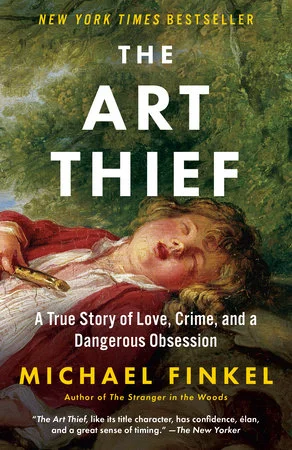
The Art Thief has a strong hook: a man steals art to keep it, rather than sell it. Michael Finkel follows that urge into a true crime story about desire, risk and the harm of treating beauty as a private right.
My pick is for the reader who wants brisk narrative nonfiction with a difficult person at its center. You do not need a long history of art to follow it. You do need some tolerance for time spent close to a thief's view of himself.
The main reservation is scope. The Art Thief is built around one man and his circle. It offers glimpses of the art world, but it is not a survey of museums, collecting or the history of art crime. Go in for a human story, and keep the public loss in view.
| Author | Michael Finkel |
|---|---|
| Kind of book | Narrative nonfiction and true crime |
| Central subject | Stéphane Breitwieser and a series of European art thefts |
| Best for | A reader who likes a short, tense, reported story |
| Main limitation | Less breadth than a general art-history book |
| Edition shown | Vintage paperback, June 25, 2024, 240 pages |
| ISBN | 9781984898456 |
What is The Art Thief about?
Stéphane Breitwieser stole from museums and other sites across Europe. His girlfriend, Anne-Catherine Kleinklaus, helped him. The stolen art went to an attic bedroom in his mother's house, where he could live with the objects he wanted.
The scale is startling. Finkel describes more than 300 works taken from some 200 places. This crime spree ran for years. But the number is not the most useful reason to read The Art Thief. The stranger question is how a private love of art becomes a claim to own it.
A simple money motive would give the story a familiar shape. Here, the objects stay close. That turns the attic bedroom into both a prize and a trap. More stolen pieces mean more secrecy, more dependence and more at stake.
The book follows the thefts and the relationships around them. This review leaves the final outcome alone. If you want to avoid major spoilers, do not read a full case summary before starting the book.
Who was Stéphane Breitwieser?
Breitwieser is a French art thief whose main spree ran in the 1990s and early 2000s. His own account presents an intense pull toward works he wants to possess. That is an account of motive, not an excuse or a diagnosis.
This distinction matters throughout The Art Thief. A person may feel that an object belongs with him. Feeling that strongly does not give him a right to it. The gap between taste and entitlement is where the book's most useful questions sit.
I would resist treating the thief as a romantic hero. Skill, nerve and a good eye can make a person interesting without making his conduct admirable. An art thief can recognize beauty and still fail to respect the people who share it.
The same care applies to Anne-Catherine Kleinklaus. Her place in the story is not just a decorative detail in a lone man's adventure. The relationship is part of the structure that lets his life continue as it does.
How Michael Finkel tells the story
Public rooms, private wants
Many thefts took place in broad daylight. That detail changes the mood of the story. Think of visitors moving through a museum during normal daylight hours, each looking at the same objects for a different reason. The act of visiting museums seems ordinary until one visitor decides that looking is not enough.
Stéphane Breitwieser stole art to keep close, and his mother's home became the place where he did so. The contrast is central: public rooms in museums, then the cramped privacy of a mother's attic. The objects remain visible to him while they disappear from everyone else's view.
For true crime lovers, the thefts in broad daylight bring tension. For readers who spend time visiting museums, the same scenes may bring anger. Both responses belong in a review of The Art Thief by Michael Finkel. The excitement of the telling should not have to erase the cost.
One theft, close up
The first chapter of The Art Thief begins inside an unfolding theft. Finkel gives the scene a close view and a strong sense of time. You can test his prose there before you choose a format.
The opening's main effect is tension. Attention narrows to a room, an object and the risk of being seen. That is a useful way into a crime story, though it can also make the reader feel caught inside the thief's priorities.
I would read that tension with a second question in mind: who is missing from this view? The museum visitor, the keeper of the collection and the future student do not get the same rush from a theft. They get an absence.
Access adds detail, but it has limits
Michael Finkel spent years seeking and then speaking with Breitwieser. That access gives the book a close view of how its central figure explains himself. It is a strong reason to choose this account over a brief retelling of the case.
Access does not make every remembered thought a fact. A person telling his own story may shape it, soften it or place himself at its center. Read statements about motive as statements about motive. They need not settle the question of why he acted.
This is a useful habit for all narrative nonfiction. A vivid scene can feel as direct as a memory, even when the writer has built it from interviews and records. The confidence of the prose and the certainty of the evidence are separate things.
The Art Thief works best for me as a close account to think with, not a final answer to the mind of a thief. No tidy label can do all that work.
What makes The Art Thief by Michael Finkel worth considering
It gives an abstract loss a small, visible space
Stolen art can sound like a problem of insurance and large sums of money. An attic bedroom changes the scale. Works once seen by many people are now kept near one person. The setting makes possession look both intimate and deeply selfish.
That is the strongest idea in the book's premise. Love of an object is easy to understand. The claim that this love outranks everyone else's access is much harder to defend.
For a reader interested in culture, this is more useful than a league table of successful art thieves. The art stolen from a small museum matters even if it does not come with a famous name or a vast price tag.
It needs little prior art knowledge
You do not need to know every artist or period to follow a true crime story built around people and choices. That makes The Art Thief a plausible first book for someone curious about art crime.
The book may also send you to look more closely. Finkel's gallery of works connected with the case gives some of the objects a visible form. Visit it when you want that context. Be aware that its captions include later events in the story.
Looking at the art helps restore something that a crime plot can squeeze out. These objects were made to do more than serve as clues or trophies. A painting has a history before the theft, and the loss is part of that longer life.
It offers a short route into a large question
The U.S. paperback has 240 pages. That makes the reading commitment smaller than a broad history, though pace will depend on the reader. The question it raises is larger: what do we owe to things that outlast us?
You can read for suspense and still stop to think about care, ownership and duty. The two interests need not compete. The best reason to choose this book is that the crime story can open those questions without a long formal introduction.
The limits I would weigh before buying
The thief takes up much of the room
A book centered on a prolific art thief will spend a great deal of time with him. If you want museum staff, the lives of artists or the later care of each stolen work to be the main focus, this is a narrower choice.
That is not a small issue of taste. The person with the most vivid story can draw attention away from the people who bear the cost. A reader can enjoy the telling and still push back against that pull.
My advice is to keep asking what a scene leaves outside its frame. A thief's success in taking an object is also someone else's failure to see it next week. That second view keeps the glamour in check.
It is not a full map of art crime
Other art thieves have other aims. The reasons people steal art cannot all be drawn from one case. Neither can the whole art world be reduced to the habits of one collector.
For a broader institutional view, INTERPOL's Stolen Works of Art Database explains how documented stolen objects are recorded. It is a reminder that recovery relies on shared information, not only on a dramatic break in a case.
If what you mainly want is a history of painting or a guide to museum collections, choose a book with that purpose. The Art Thief can spark that interest, but it should not have to serve as the whole course.
Some questions remain uncomfortable
A true crime story does not owe us a clean motive that makes every act easy to explain. Nor does the absence of physical force make a theft harmless. In real life, the loss of art can reach well beyond the room from which it was taken.
Expect a troubling story with emotional harm and destruction, not a light caper with a harmless rogue. I would choose it for a reader ready to sit with that discomfort. I would not choose it as a cheerful gift just because the recipient likes museums.
What readers seem to value
In reader discussions, the two responses that stand out are pace and the damage caused by obsession. Some describe finishing the book quickly. Others dwell on relationships and the inability to stop. Those are individual experiences, not a promise about yours.
They do help identify the likely audience. If you enjoy reported stories that move with the pressure of a novel, The Art Thief has a clear appeal. If you want a calm account of art and its makers, the crime-driven shape may be less satisfying.
Do not buy only because someone says it is a fast read. A short, tense book can still leave a heavy impression. Mood is part of the decision.
Paperback, ebook or audio?
The Vintage paperback shown here was published on June 25, 2024. Its ISBN is 9781984898456. Other formats and editions have different details, so compare like with like when shopping.
Print is useful if you want to pause over names and flip back. An ebook gives you quick search and larger type. Audio suits a reader who likes a continuous telling, but images and notes may be less easy to consult. Check what comes with the recording you choose.
A sample is the best small test. Listen or read for long enough to notice the voice, not just the subject. If the opening makes you want more context, keep a print or digital copy nearby. If the close scene suits you, audio may be a good fit.
A library loan also makes sense if you are new to narrative nonfiction. You can learn whether the form works for you before buying a shelf of similar books.
Questions to take to a book club
A dangerous obsession, not a harmless collection
The Art Thief can tempt a reader to treat the attic as a private museum. That phrase needs care. A museum has duties to objects and to the people who come to see them. A personal collection built through theft rests on taking those choices away from others.
Breitwieser may see himself as an art collector with unusually strong feelings. Michael Finkel gives us room to hear that view. The reader still has to ask what the label hides. An art collector who steals a work has not merely chosen a new way to enjoy it. He has changed who can study it, share it and decide how it is kept.
Small museums make that loss easy to overlook. A stolen object may not be a world-famous painting, yet it can help tell the story of a place. For a local visitor, a familiar work can be part of what makes a museum worth returning to. Its value does not depend on a headline price.
That is one reason I would discuss The Art Thief with someone who likes art history. The stolen pieces have lives before and after the crime. Michael Finkel's tight focus gives the thefts pace, but a reader can still pause to think about the people who made, studied or cared for each object.
What does the title promise?
The full title is The Art Thief: A True Story of Love, Crime, and a Dangerous Obsession. Each part points to a different reason to read. The crime supplies tension. Love raises questions about the bond between two people and the wish to own beautiful things. Obsession ties those parts together.
I would not treat the word love as a defense. In this true story, feeling deeply about art does not settle how one should act. That gap gives The Art Thief more to offer than a tally of thefts.
Other art thieves may seek money, status or a bargaining tool. This book does not give a full account of those motives. Its narrower task is to follow one man's choices and the people drawn into them. That makes it a stronger personal story than a general guide to cultural crime.
How much museum context should you expect?
Do not judge the harm only by the estimated value of the art stolen. The publisher puts the collection at about two billion dollars. That is an estimate, not a cash price from a sale. Small museums and regional museums can lose something hard to replace even when an object has no widely known market value.
Expect enough to follow the objects and the stakes of a scene. Do not expect a course in how a museum catalogs, conserves or lends its collection. Those are large subjects in their own right.
For the reader, this is a tradeoff worth naming. Michael Finkel can keep the story moving because he stays close to a small group of people. A broader view of small museums might slow that pace, while giving more space to the harm done. Which approach you want should shape your choice.
After reading, a visit to a local museum can put the question on a human scale. Spend time with one modest object. Read its label. Think about the work needed to place it before you. That is a useful answer to a crime story that spends so much time on one man's wish to take things home.
Questions to take to a book club
- When does love of art become a wish to control it?
- Did the close view of the thief make you understand him, excuse him, or both?
- Whose account would change the book most if it had equal space?
- What is lost when an object leaves public view, even if it is not sold?
- Did the suspense help you think about the harm, or briefly distract you from it?
Those questions keep the discussion on more than the next theft. A group can disagree about the prose and still have a useful talk about culture, care and the force of a compelling story.
Is The Art Thief a true story?
Yes. Michael Finkel's book is narrative nonfiction about real thefts and real people. It is not a novel with an invented art thief. That does not mean every claim made by a person in the story should be accepted without thought.
The practical distinction is the writer's promise. In fiction, scenes and people may be invented. In reported work, they should rest on evidence, with uncertainty kept in view. A smooth reading experience does not erase that difference.
If you enjoy the pace but want an invented story set in the past, our historical fiction guide offers another route. If the near-matching title led you here, The Book Thief by Markus Zusak is a very different novel about a girl in wartime Germany.
My verdict on The Art Thief by Michael Finkel
I would choose The Art Thief for a reader who wants a compact, tense account with a question worth carrying beyond the last page. Michael Finkel's close view gives the story force. It also gives the reader a reason to stay alert to whose view fills the frame.
The strongest reason to read is not the scale of the haul. It is the gap between caring about beauty and caring for it. An art thief may feel that possession brings him closer to a work. Everyone left outside that private room has a different claim.
Try the first chapter. If the voice draws you in and the moral unease makes you curious, the book is a strong fit. If you want the art to take center stage over the thief, look for a broader history instead.